Natural edge (live edge)
A natural edge keeps the outer contour of the tree, smoothed and finished. No two tops are alike, and the edge naturally varies in line and thickness. It suits rooms where the table is meant to be the centrepiece and works well with simple steel bases.
Swiss edge
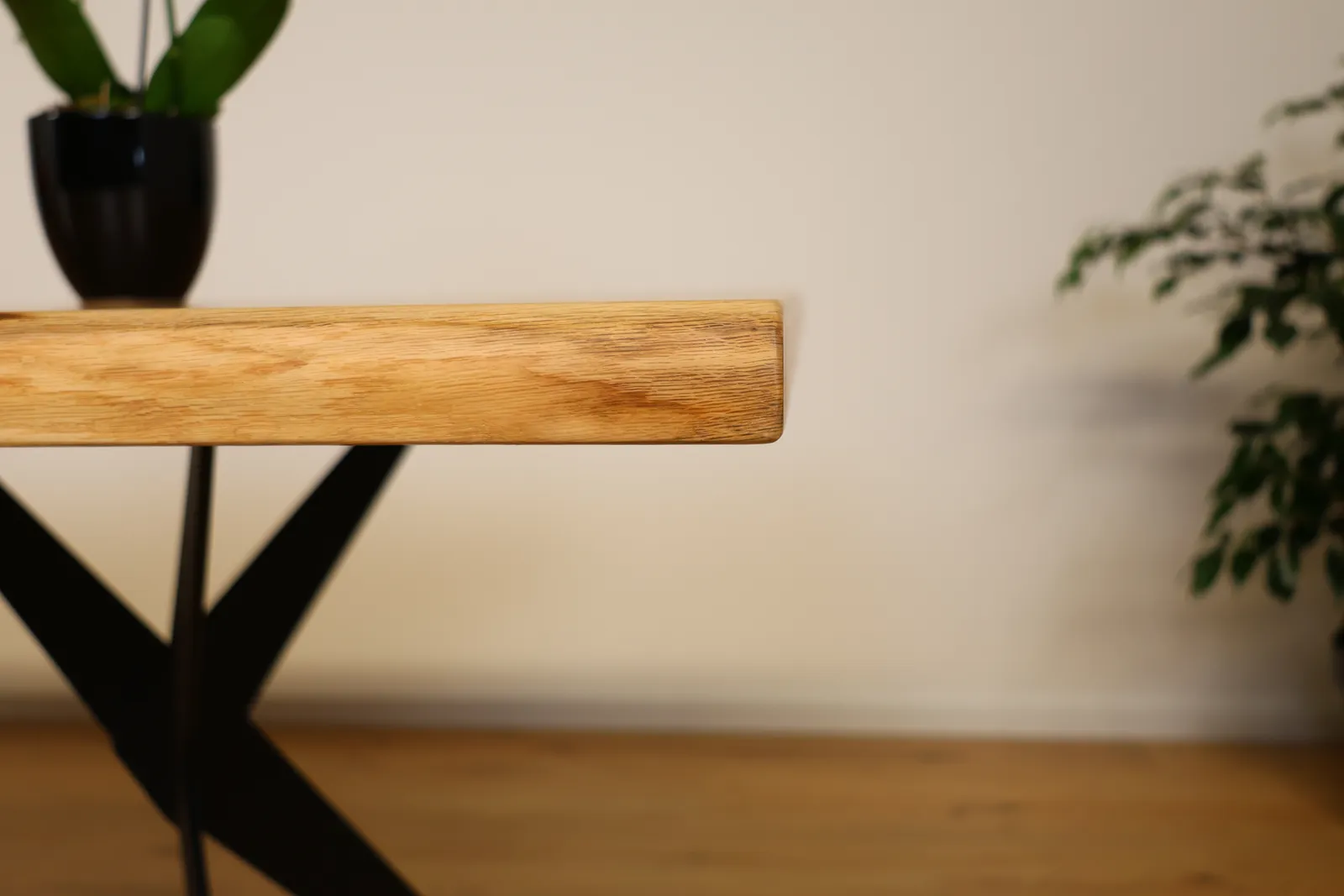
A Swiss edge is an angled bevel on the underside of the top. Seen from the side, a solid top looks lighter and slimmer, while the full thickness stays where it counts. The straight upper edge feels clean and is comfortable to rest your forearms on.
Straight edges and rounded corners
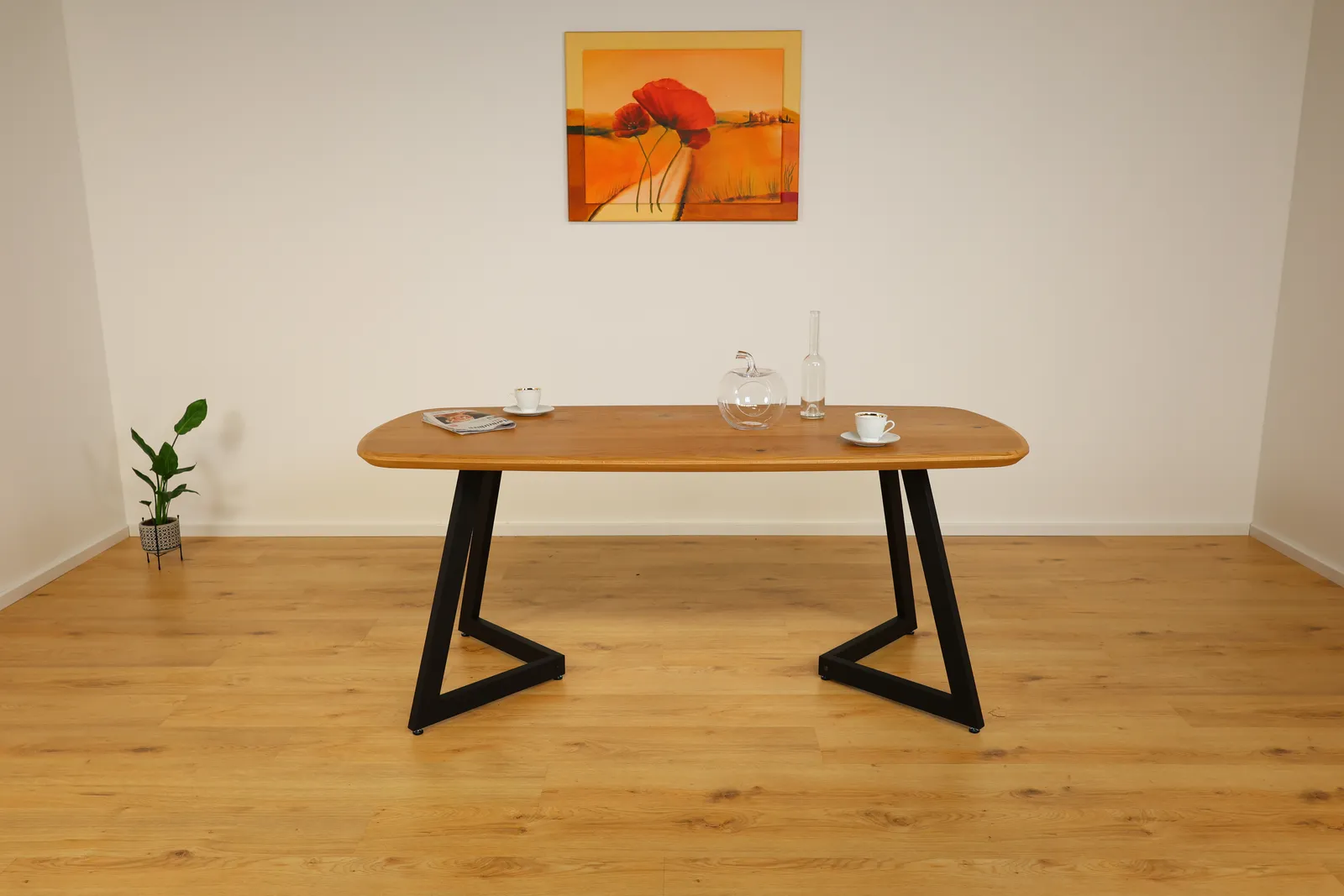
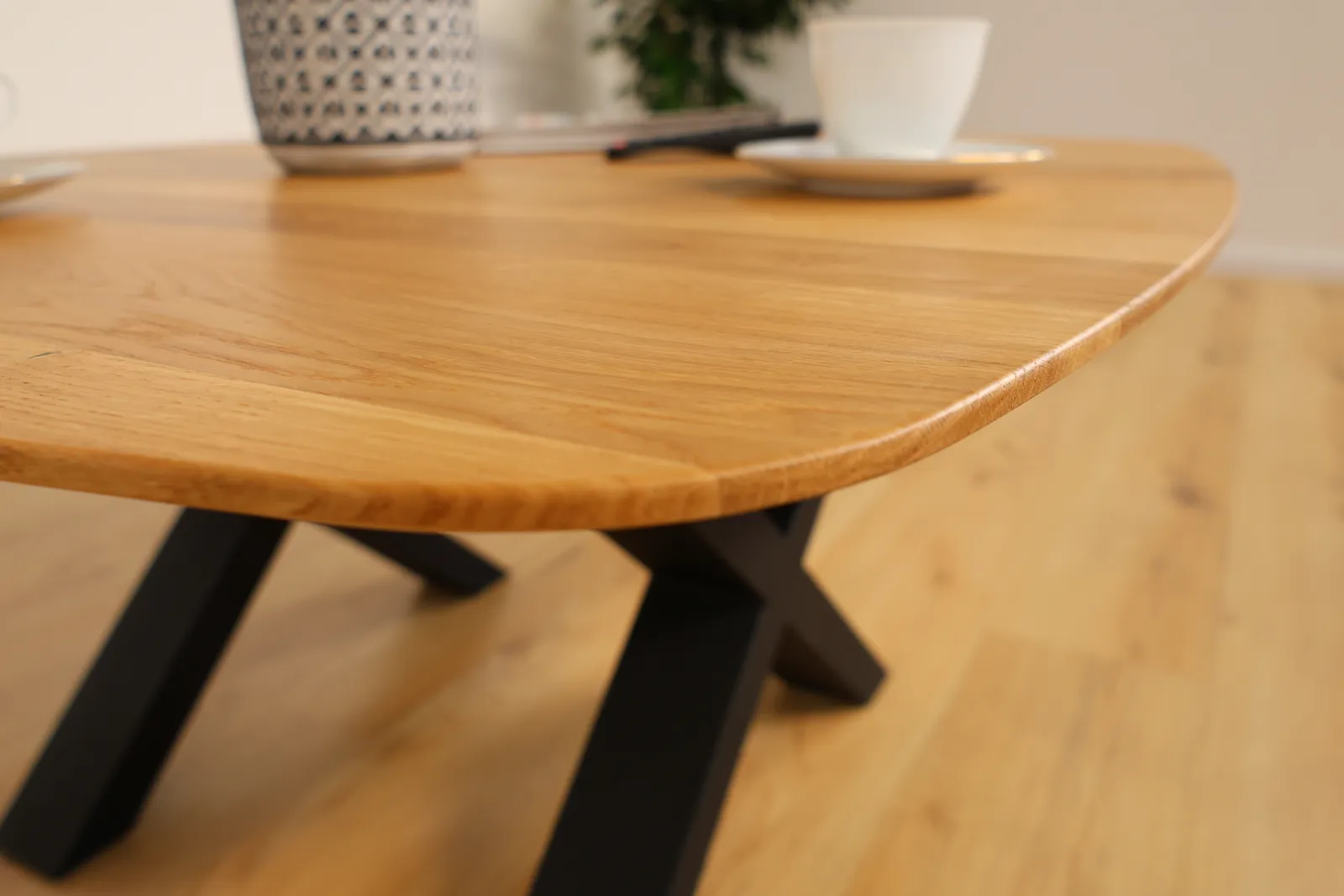
A straight, slightly eased edge gives a calm, architectural look. Rounded corners are softer to the touch and easier to walk past in tight rooms or with children in the house.
Oil and hardwax oil
Oil soaks into the wood instead of forming a layer on top. The surface keeps a natural feel and the grain stays visible. Hardwax oil adds wax for more surface protection against water and stains while staying just as easy to repair.
The advantage of both: wear and small marks can usually be refreshed locally by cleaning and re-oiling, without sanding the whole top. Lacquer forms a closed film that resists spills well but is harder to repair in one spot.
Tone and the character of oak
Oak is a natural material. Grain, knots and colour vary from board to board, and light gradually warms the tone over time. Tinted oils change the starting colour, from lighter to darker tones; colours on screen are only a guide, so ask us if the exact shade matters.
Care in everyday use
Wipe the top with a damp, well wrung cloth and dry it afterwards. Use coasters for hot pots and glasses, avoid harsh cleaners and refresh the oil when the surface starts to look dry. Our care guide explains each step.